LAWLS Bookstore

Showing posts with label omega-3. Show all posts

Tuesday, October 21, 2014

Depression Meds & Fish: Potential to Improve Patient Response

The 5 Day Pouch Test: Express Study Guide

Weight loss surgery patients must always be concerned about dietary nutrition and how our surgically altered digestive systems are responding to and absorbing nutrients, vitamins and minerals, and medications. A new study, though not specific to WLS patients, finds in general people who take antidepressants (SSRI) and regularly include fatty fish in their diet have a better response to the medication than those who eat little or no fish. The findings were shared in a news release October 20, 2014 by European College of Neuropsychopharmacology. The following is an abstract of the study prepared by David McNamee and published on Medical News Today

Could eating more fish make antidepressants work better?

The participants who ate the least fish tended to have the weakest response to antidepressants, whereas patients who had the most fish in their diet had the strongest response.
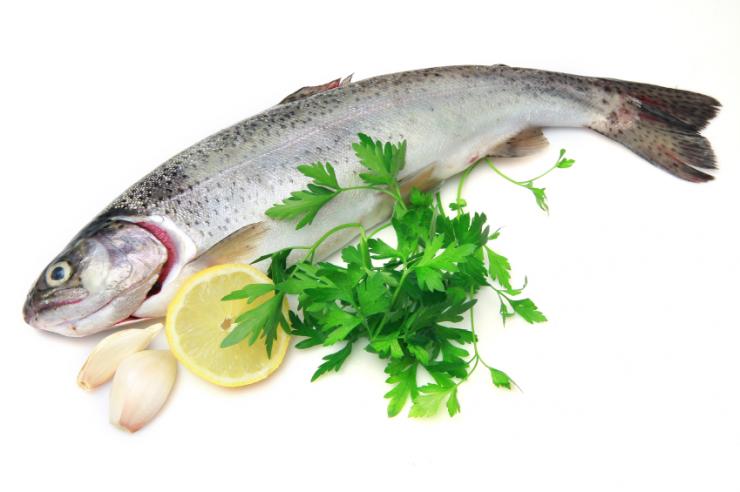

New research finds that increasing fatty fish intake may be one way to improve the response rate among depressed patients who do not find antidepressants beneficial.

Up to half of patients with depression do not respond to selective serotonin reuptake inhibitor (SSRI) antidepressants.

Previous studies have suggested there may be an underlying genetic reason why up to 42% of cases do not respond to antidepressants. And in 2013, the journal Biological Psychiatry published an online risk calculator that estimated the likelihood of antidepressant response, based on the findings of a large antidepressant trial.

The researchers behind the new study were investigating factors that influence antidepressant non-response when they hit upon an association between improved effectiveness and fish intake. Lead researcher Roel Mocking explains the team's findings:
"We were looking for biological alterations that could explain depression and antidepressant non-response, so we combined two apparently unrelated measures: metabolism of fatty acids and stress hormone regulation. Interestingly, we saw that depressed patients had an altered metabolism of fatty acids, and that this changed metabolism was regulated in a different way by stress hormones."
The patients with depression were then administered a 20 mg dose of an SSRI every day for 6 weeks. Patients who did not respond to the SSRIs were provided with a gradually increased dose of up to 50 mg per day. Non-responding patients tended to have 'abnormal fatty acid metabolism'

Taking measurements of fatty acid and cortisol levels throughout the trial, the researchers found that the depressed patients who did not respond to the antidepressants tended to have abnormal fatty acid metabolism.

American Heart Association Fish Intake FAQ's

Because fatty fish is rich in fatty acids, such as omega-3 DHA, the researchers examined the fish intake in the diet of the participants. They found that the participants who ate the least fish tended to have the weakest response to antidepressants, whereas patients who had the most fish in their diet had the strongest response.

The team reports that participants who ate fatty fish at least once a week had a 75% chance of responding to antidepressants, while participants who never ate fatty fish had only a 23% chance of responding to them. "This means that the alterations in fatty acid metabolism (and their relationship with stress hormone regulation) were associated with future antidepressant response," says Mocking.

McNamee, David. "Could eating more fish make antidepressants work better?." Medical News Today. MediLexicon, Intl., 20 Oct. 2014. Web. 21 Oct. 2014. http://www.medicalnewstoday.com/articles/284102.php


It may be quite some time before a definitive study such as this is made of weight loss surgery patients. In the meantime we can actively increase our intake of omega-3 fatty acids by increasing our fish intake. At present the American Heart Association provides approved guidelines and suggestions for including fish in a healthy diet. See this article:  FAQ's: Fish and the Heart Healthy Diet. And check out this recipe: Mediterranean Sea Bass.


FAQ's: Fish and the Heart Healthy Diet

The 5 Day Pouch Test: Express Study Guide

The American Heart Association is a terrific source of dietary information for improved heart health. While keeping in mind the traditionally prescribed high protein diet for weight loss surgery patients we most certainly can benefit from the generalized information from the AHA. Here I've pulled some questions and answers regarding fish intake in the heart healthy diet:
"Enjoy fish baked or grilled, not fried.  Choose low-sodium, low-fat seasonings such as spices, herbs, lemon juice and other flavorings in cooking and at the table." AHA


How often should I eat fish?
The American Heart Association recommends that consumers without documented coronary heart disease (CHD) eat a variety of fish, preferably oily fish (salmon, tuna, mackerel, herring and trout), at least twice a week.

Remember: Two Fish Meals a Week
When we talk about the advantages of eating fish, we’re talking about over the long term – which comes from eating it twice a week," said Alice Lichtenstein, D.Sc., former chair of the American Heart Association's Nutrition Committee. Remember the adage that an apple a day keeps the doctor away? “Eat fish twice a week” isn’t quite as catchy, but Dr. Lichtenstein believes it could have the same effect.“This is not new advice,” she adds. “The problem is people don’t seem to embrace it.” American Heart Association

Try This Recipe: Mediterranean Sea Bass

Are there differences in omega-3 fatty acid content between wild fish and farm-raised fish?
Some farmed fish can have higher levels of omega-3 fatty acid than wild fish, and vice versa.  The omega-3 fatty acid content of wild fish can vary by the temperature of their environment (i.e., higher during the summer than winter), while the omega-3 fatty acid content of farmed fish can vary based on what they are fed.

The American Heart Association recommends eating fish at least twice a week, especially species high in omega-3 fatty acid such as salmon, mackerel, herring and trout, regardless of whether they are wild or farmed.
If I eat fish at least twice a week, should I worry about contamination?
For middle-aged men and for post-menopausal women, the benefits of eating fish a few times per week far outweigh the potential risks.

As fish consumption increases, the number of fatal cardiovascular events decreases and the cardiovascular benefit increases.
Research has shown that omega-3 fatty acids may help decrease the risk of arrhythmias (irregular heartbeats) and may help slow the growth rate of artery-clogging plaque.  Scientific evidence shows that eating fish is associated with reduced cardiovascular risks and increased health.  Based on these benefits, and the fact that most people do not eat recommended amounts of fish, it seems reasonable to recommend that people eat more fish.

Pregnancy: For women who are or may become pregnant, nursing mothers and young children, the benefits of eating fish twice per week are also greater than the potential risks.  However, four specific fish species (shark, swordfish, king mackerel and tilefish) should be avoided to minimize exposure to mercury.  In addition, albacore tuna can be eaten but should be limited to six ounces (one average meal) per week.

The potential risks from other contaminants (such as PCBs or dioxins, which are also found in trace amounts in many foods) are exceedingly small relative to the benefits of eating fish, so you don’t need to be concerned about eating fish because of this potential issue.  (If you eat a lot of sports-caught freshwater fish from local waters, check your local advisories.)  Consumers should remove the skin and surface fat before cooking to reduce the risk of eating contaminants.

Should I take fish oil supplements?
Fish intake has been associated with a lower risk of heart disease.  The American Heart Association recommends that consumers without documented coronary heart disease (CHD) eat a variety of fish, preferably oily fish (salmon, tuna, mackerel, herring and trout), at least twice a week.  Consuming fish oil supplements should only be considered by people with heart disease or high levels of triglycerides who consult with their physicians.

People with documented CHD are advised to consume about 1 gram per day of the fish oils EPA and DHA (eicosapentaenoic and docosahexaenoic acids), preferably from oily fish, although EPA+DHA supplements could be considered in consultation with their physicians.

People who have elevated triglycerides may need two to four grams of EPA and DHA per day provided as capsules under a physician’s care.  Very high intake (greater than three grams of EPA+DHA per day) could theoretically cause excessive bleeding in some people.

For more healthy heart and lifestyle information visit AHA: Getting Healthy